

Every reputable trenchless contractor quotes a 50-year design life for CIPP lining. It's a fair question to ask where that number comes from — and what has to go right on installation day for your liner to actually get there.
Where the 50-year number comes from
CIPP liners aren't rated by guessing. The resins and felt or fiberglass tubes used in quality lining systems are tested under ASTM standards — including long-term hydrostatic and flexural testing that extrapolates structural performance over decades. Independent lab testing on cured liner samples consistently supports a 50-year structural design life.
CIPP itself isn't new technology. The process was developed in the 1970s, and some of the earliest municipal installations in Europe have now been in the ground for over 50 years — still in service.
Why a liner outlasts the pipe it replaces
A cured CIPP liner is seamless and jointless — the two failure points of traditional pipe. Clay laterals fail at their joints when roots find the gaps. Cast iron fails by corroding and scaling. A cured epoxy liner has no joints to separate and nothing for roots or corrosion to attack.
The liner is also structural, not just a coating. A properly designed CIPP liner is engineered to carry the full soil and traffic load even if the host pipe around it continues to deteriorate. The old pipe becomes a form; the liner becomes the pipe.
What can shorten a liner's life
The 50-year rating assumes a quality installation — and that's where contractors differ. The lifespan killers are almost always workmanship, not materials:
- Inadequate cleaning — scale and debris left in the host pipe create voids behind the liner
- Wrong resin mix or cure — under-cured liner never reaches design strength
- Skipped calibration — a liner that wrinkles or bridges creates snag points
- No post-lining camera verification — defects go unseen until they fail
How to make sure yours lasts
Ask three questions before hiring anyone to line a pipe. First: what lining system do you install, and are you factory-certified on it? Systems like Perma-Liner, Nu Flow, and LMK certify their installers for a reason.
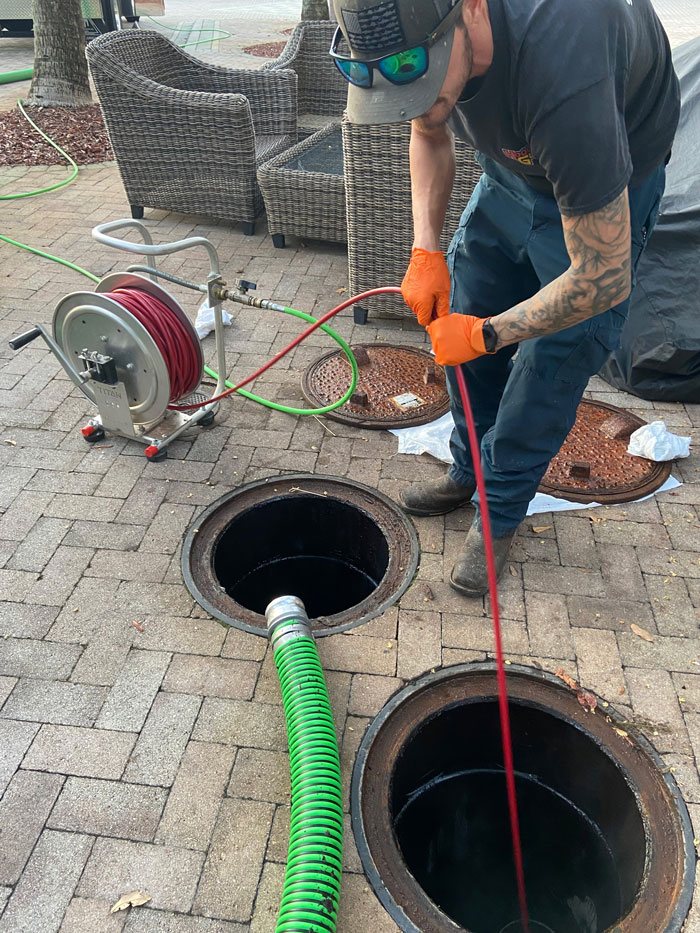
Second: how do you prep the pipe? The honest answer involves hydro jetting and descaling until the camera shows a clean host pipe — not a quick cable run.
Third: will I get post-lining camera footage? You should see the finished liner, end to end, before the crew leaves. We deliver that footage on every job — it's your proof the 50-year liner is actually in the ground.